How Basement Waterproofing Milwaukee Homeowners Can Rely On
Living in Milwaukee means dealing with wet basements. It is not a matter of if but when the next heavy rain will test your foundation. I have spent years working on older homes in Wauwatosa and the surrounding area, and I can tell you that the difference between a dry basement and a disaster often comes down to a few key decisions. The ground here is heavy clay that holds water, and the freeze-thaw cycle puts constant stress on footers and walls. That is why basement waterproofing Milwaukee homeowners trust has to be built on solid methods, not quick fixes.
Why Older Homes Need Special Attention
The housing stock in Wauwatosa and similar neighborhoods was built mostly between the 1920s and 1960s. Back then, builders did not always install drain tile around the footer or apply a waterproofing membrane to the outside of the foundation. They relied on gravity and a bit of luck. Over time, the mortar mix in the brick or block walls can degrade, and small foundation cracks appear. Water follows those cracks. I have seen crawl spaces that turned into muddy pits because the original weeping tile was crushed by tree roots or buried under decades of soil shift.
One of the first things I check on any old house is the condition of the parging on the exterior walls. Parging is that cement coating applied to the outside of the foundation. When it flakes off or cracks, water gets directly into the block. That leads to bowing walls and efflorescence inside the basement. A proper approach to basement waterproofing Milwaukee style means addressing the exterior first, but sometimes that is not possible due to decks, driveways, or tight lot lines. That is when interior solutions come into play.
Interior vs. Exterior Waterproofing
There is a big debate in the industry about which method is better. The honest answer is that it depends on the house. Exterior waterproofing involves digging down to the footer, cleaning the wall, applying a waterproofing membrane, and installing a new drain tile system. That is the gold standard. It keeps water away from the foundation entirely. But it can cost tens of thousands of dollars and tear up your landscaping.
Interior waterproofing, on the other hand, manages water once it has already entered the basement. That includes things like sump pumps, French drains installed inside the basement floor, and coating the walls with SealBond or a similar hydraulic cement. SealBond is a product I have used many times on foundation cracks and block walls. It bonds to the damp concrete and creates a waterproof barrier. It is not a permanent solution for a bowing wall or a structural issue, but it buys time and stops the immediate seepage.
I once worked on a house in Wauwatosa where the basement floor had heaved up from hydrostatic pressure. The owner had tried three different paint-on sealers from the hardware store. None worked. We ended up installing a sump pump with a backup battery, plus a French drain system that channeled water to the pump pit. That combination has kept the basement dry for six years now. The key is matching the solution to the water load.
Common Issues That Need Structural Repair
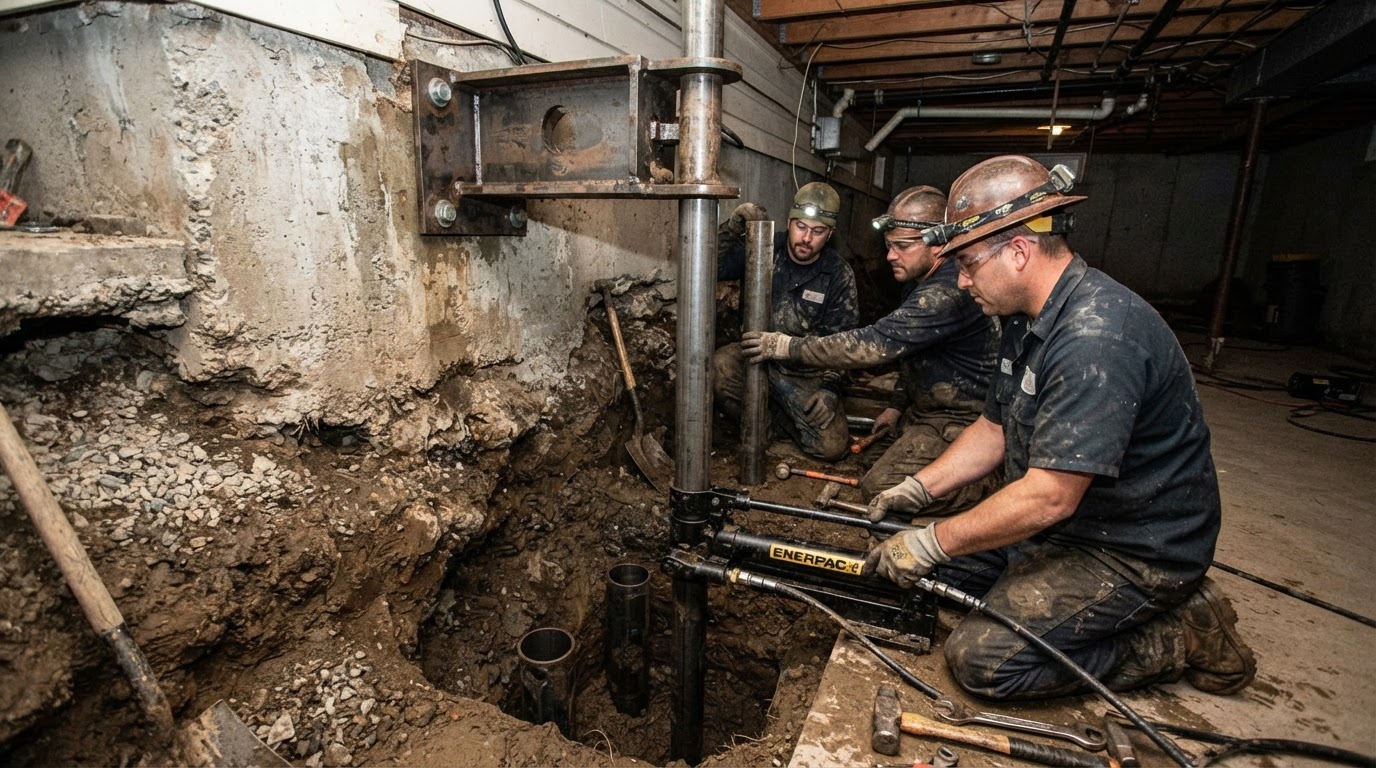
Not every wet basement is just a waterproofing problem. Sometimes the water is a symptom of a deeper structural issue. A foundation crack that is wider than about an eighth of an inch often means the footer has shifted. That is a structural repair, not a waterproofing job. I have seen homeowners spend money on waterproofing membrane and parging only to have the wall bow further because the crack was never stabilized.
For non-structural cracks, epoxy injection is a reliable fix. You drill small holes along the crack, inject epoxy under pressure, and it bonds the concrete back together. That stops water and restores some strength. But if the wall is already bowing, you need carbon fiber straps or an I-Beam system to hold it in place. Carbon fiber strips are strong, thin, and can be installed on the interior without excavation. I have used them on several homes in Milwaukee where the basement wall had moved three or four inches. They do not fix the crack, but they stop the wall from moving further. Then you can address the waterproofing on the outside.
Radon Mitigation and Waterproofing
Another topic that comes up a lot in Milwaukee is radon. Radon is a radioactive gas that seeps through cracks in the basement floor and foundation. The same paths that let water in also let radon in. A proper basement waterproofing Milwaukee contractor will often combine radon mitigation with the waterproofing work. That might mean sealing the basement floor with a vapor barrier, installing a sub-slab depressurization system with a fan, and making sure all cracks are sealed with polyurethane caulk or epoxy. I have seen houses where the radon levels dropped by more than half just from fixing the foundation cracks and sealing the floor.
One homeowner in Wauwatosa had a radon reading of 12 picocuries per liter, which is well above the EPA action level of 4. We sealed every crack in the basement floor, installed a sump pump cover with a gasket, and put in a small fan that vents to the outside. Within a month, the radon level was below 2. Water problems and radon problems are often the same problem.
Choosing the Right Materials
I have tried dozens of products over the years. Some work, some do not. Here is what I have learned to trust:
- SealBond for coating bare concrete or parging repairs. It bonds to damp surfaces and does not peel.
- Hydraulic cement for plugging active leaks. It expands as it cures and can stop running water in minutes.
- Carbon fiber straps for stabilizing bowing walls without excavation. They need to be installed with tension, not just glued on.
- PVC drain tile for exterior footing drains. It lasts longer than clay or fiber pipe.
- A good sump pump with a cast iron base and a float switch. Plastic pumps crack in cold weather if the pit freezes.
That list covers most situations, but every house is different. I always recommend testing the water flow during a rainstorm before deciding on the approach. Watch where the water comes in. Is it a single crack, or is it seeping through the whole wall? Does the water pool on the basement floor, or does it run to a floor drain? That observation tells you whether you need a point repair, a drain system, or a full exterior waterproofing membrane.
The Role of the Crawl Space
Crawl spaces are often the most neglected part of a house. In many older Milwaukee homes, the crawl space was never meant to be accessed. But it is connected to the basement by a small opening. Water and humidity in the crawl space migrate into the basement. I have seen crawl spaces with standing water, moldy insulation, and sagging floor joists. The best fix is to install a vapor barrier on the dirt floor, run a drain tile to daylight or to a sump pump, and insulate the walls with rigid foam. That keeps the moisture from rising into the living space.
One project in Wauwatosa involved a crawl space that had a dirt floor and no ventilation. The humidity was so high that the floor joists had rotted in places. We dug a trench around the perimeter, laid perforated drain pipe, and covered the dirt with a heavy polyethylene sheet. Then we installed a small exhaust fan. The humidity dropped from 85 percent to 55 percent. That simple crawl space work made the basement above it feel completely different.
What to Expect from a Professional Job
When you hire someone for basement waterproofing Milwaukee style, you should expect a thorough inspection, not a sales pitch. A good contractor will look at the grade around the house, the condition of the downspouts, the slope of the yard, and the interior wall condition. They should also check the footer depth and the type of soil. If they only talk about coatings and never mention drainage, that is a red flag.
The best results come from a combination of exterior and interior work. If your budget allows, start with the exterior: dig down, apply a waterproofing membrane, install drain tile, and backfill with gravel. That addresses the root cause. Then, if you still have a persistent damp spot, use an interior French drain or a sump pump as a backup. Do not rely on coatings alone, especially if you have a bowing wall or significant foundation cracks. Those need structural repair first, either with carbon fiber or an I-Beam system.
Basement waterproofing in Milwaukee is not a one-size-fits-all service. The clay soil, the freeze-thaw cycles, and the age of the houses all demand a tailored approach. I have seen too many homeowners spend money on the wrong fix and still have a wet basement the next spring. Take the time to understand where the water is coming from, and choose the method that matches the problem. That is the only way to keep your basement dry for the long haul.